

Why One ASL / XINGYI Grinder Order Includes Both 16# and 30# Medium Bond Metal Tools
Why One ASL / XINGYI Grinder Order Includes Both 16# and 30# Medium Bond Metal Tools
A practical explanation of why one concrete grinding order may include two grit steps for medium concrete floor prep with ASL / XINGYI-compatible trapezoid metal tools.
When one ASL / XINGYI grinder order includes both 16# medium bond and 30# medium bond metal tools, it usually means the contractor is building a practical two-step grinding workflow, not buying duplicate products. The 16# tool is there for stronger opening and faster first-stage cutting. The 30# tool is there to refine the scratch pattern and leave the slab in a more controlled condition for the next stage.
That is the most important point. This kind of order is not random. It reflects how real floor grinding is usually done on medium concrete.
Why 16# and 30# are ordered together
A single grit often cannot do the whole job efficiently. On many concrete floors, especially when the slab needs both opening and control, the first step must cut more aggressively, while the next step must make the surface more manageable.
That is why 16# and 30# metal bond tools are often ordered together.
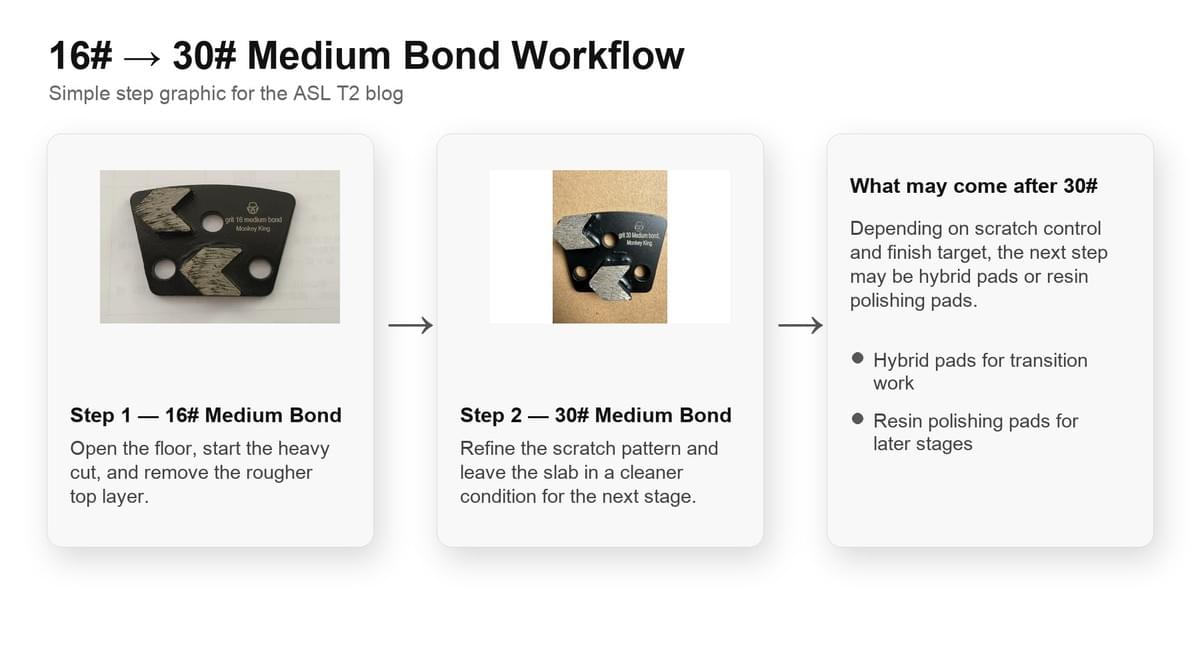
The 16# medium bond step is the more aggressive cut. It is commonly used to open the floor faster, remove the rougher top layer, and start the main grinding work. The 30# medium bond step is then used to reduce the heavier scratch pattern left by 16# and prepare the slab more cleanly for whatever comes next.
So this is not a case of “two similar products.” It is a case of two working stages in one system.
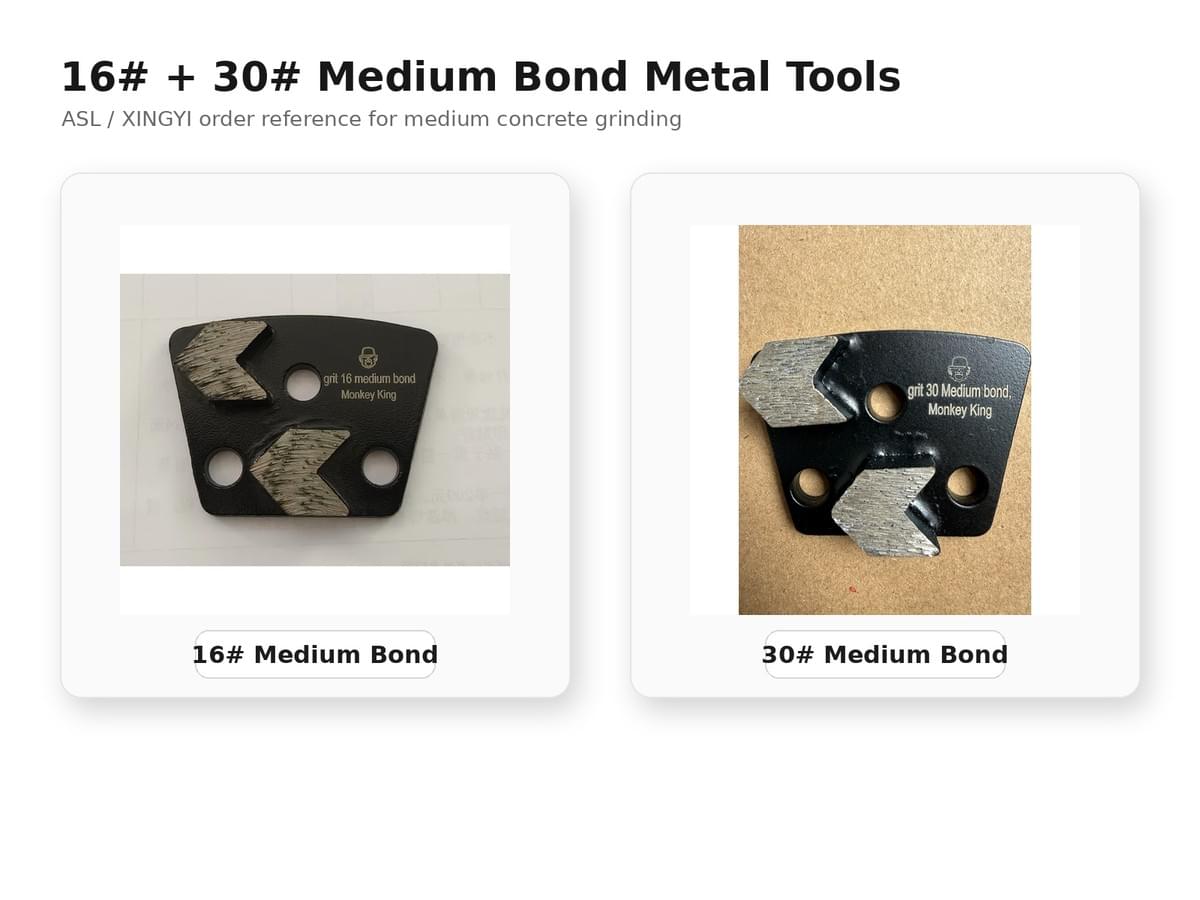
The order shown here is for medium concrete, and that matters. For this type of slab, medium bond is often the most balanced starting point. It avoids wearing too fast like a softer bond can on easier slabs, and it also avoids becoming too closed or too slow like a harder bond can in the wrong condition.
In practical grinding work, medium bond is often the safest direction when the concrete is not clearly soft and not clearly very hard. It gives a more stable balance between cutting speed and wear rate, especially for contractors who want a predictable result rather than guessing between two extremes.
For this reason, metal bond grinding is not just about choosing a grit. It is about matching grit, bond, concrete condition, and machine fitment.
Why this setup fits ASL / XINGYI grinders
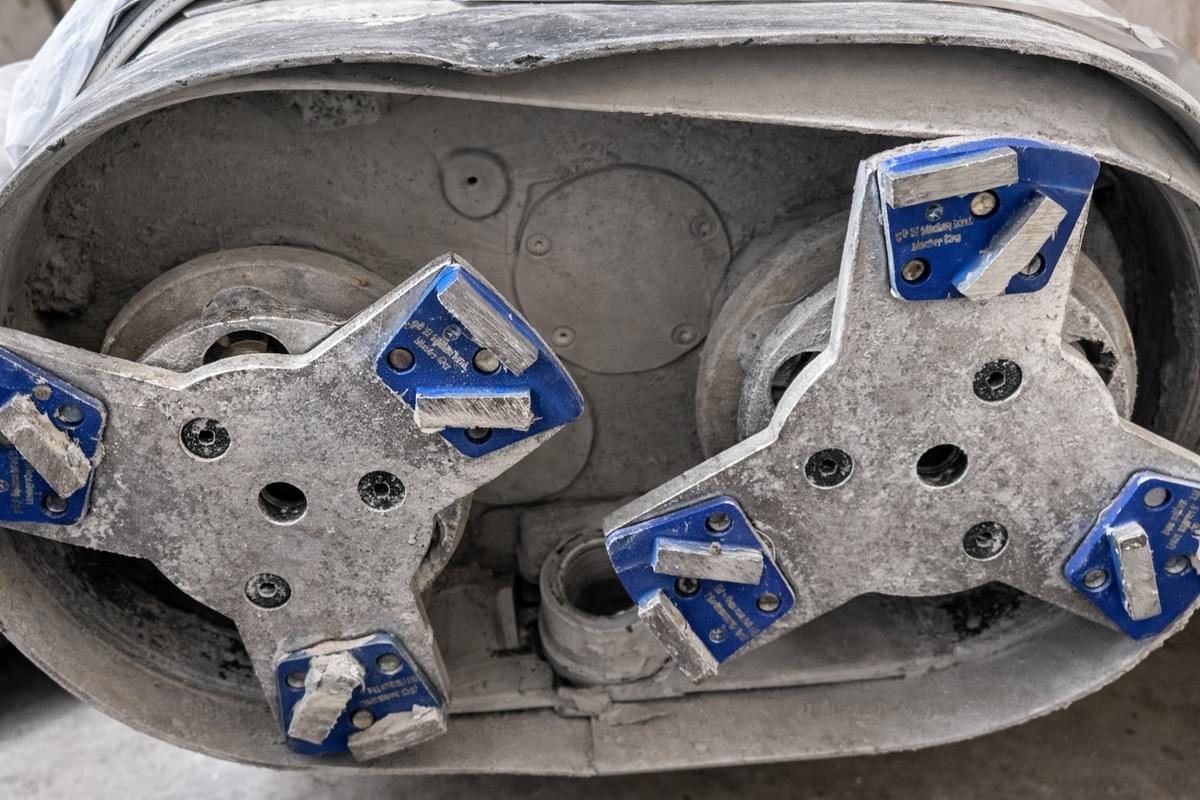
This order is for trapezoid metal bond diamond grinding tools for ASL / XINGYI grinders, which means machine compatibility is part of the buying logic from the beginning. The customer is not only choosing grit and bond. The customer is also choosing the correct tooling shape and connection for the machine system.
What the 16# step is actually doing
The 16# tool is not a finish grit. It is a production grit. Its role is to cut faster, open the slab, and begin the heavy work.
On medium concrete, the 16# step is commonly used to:
- open the floor more quickly
- remove rougher surface material
- begin flattening uneven areas
- prepare the slab for a cleaner second pass
That is why it belongs at the beginning of the workflow. If the floor needs productive opening, 16# usually makes more sense than starting too fine.
What the 30# step is actually doing
The 30# tool is there to improve control after the first cut. Once the slab has been opened with 16#, the surface usually still needs a more consistent scratch pattern before moving forward.
That is where 30# makes sense. On medium concrete, it is commonly used to:
- reduce the rougher scratch look left by 16#
- make the slab more even visually and mechanically
- create a better condition for later grinding or transition work
- leave the floor more ready for the next stage
In other words, 30# is not repeating the same job. It is doing the next job.
After 30#, the next step may be hybrid pads or resin polishing pads depending on scratch control and finish target.
Why this order reflects real jobsite logic
This kind of order makes sense because it matches four things correctly at the same time:
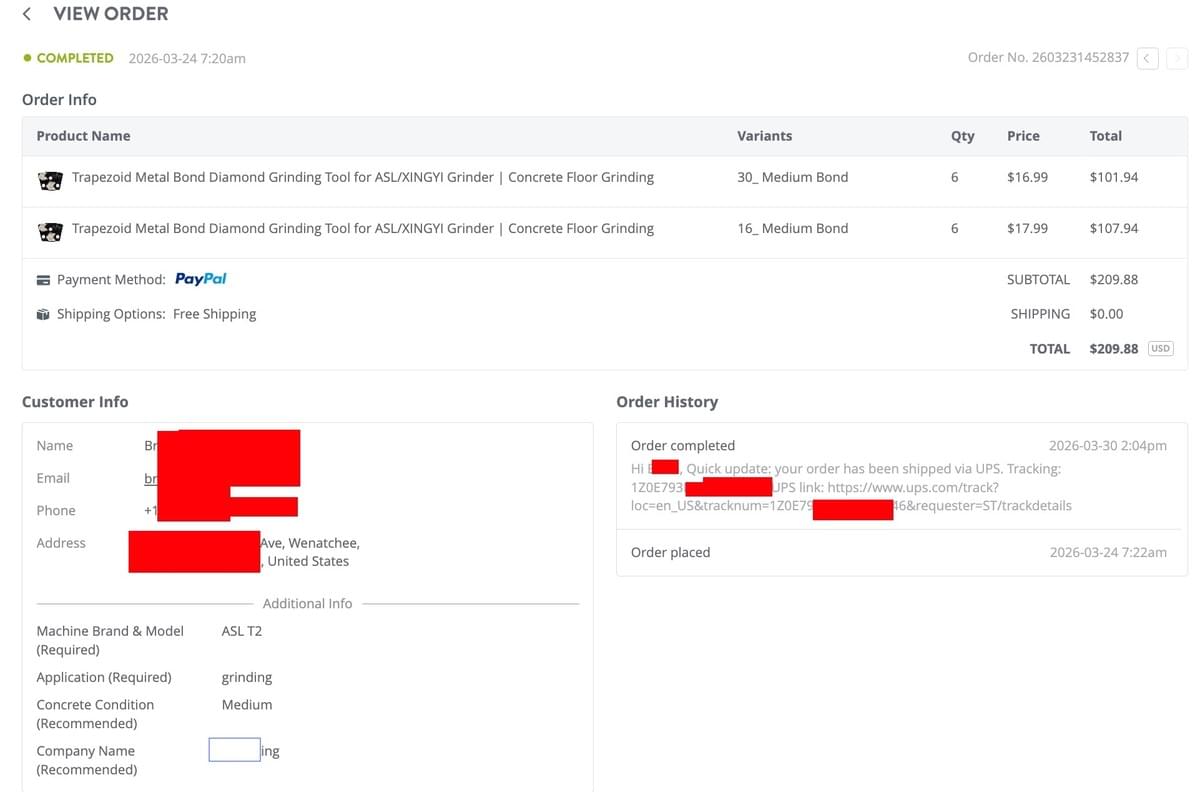
the machine: ASL T2
the application: grinding
the concrete condition: medium
the grit sequence: 16# first, 30# next
That is what good tool selection looks like on a real site. The buyer is not choosing a product in isolation. The buyer is building a workflow that matches the machine and the slab.
What may come after 30#
For many jobs, 30# is still not the end of the process. It often marks the later part of the early metal grinding stage. Depending on the required finish, the next steps may include finer metals, transition and hybrid pads, or later resin polishing pads if the floor needs a smoother or more coating-ready result.
After the 30# step, the contractor should decide whether the floor needs finer metal grinding, a hybrid transition step, or resin polishing. The next step depends on the target finish, scratch pattern, and whether the floor is being prepared for coating or polishing. For readers planning the next step, the most common paths after 30# are transition and hybrid pads for scratch refinement, or resin polishing pads when the floor is ready for later polishing stages.
Final Takeaway
If one ASL / XINGYI grinder order includes both 16# medium bond and 30# medium bond metal tools, the reason is usually simple: 16# is used for stronger opening and faster first-stage grinding, while 30# is used to refine the surface and control the scratch pattern afterward.
For ASL T2 grinding on medium concrete, this is a practical and well-matched setup. It combines the correct machine fitment, a balanced bond choice, and a logical two-step grit sequence that many contractors use in real floor grinding work.
Need help matching ASL / XINGYI tools to your grinder and slab condition? Contact us before ordering.