

Copper Bond vs Iron Bond vs Ceramic Hybrid Pads: Which One Fits Your Concrete Polishing Goal?
Copper Bond vs Iron Bond vs Ceramic Hybrid Pads: Which One Fits Your Concrete Polishing Goal?
A practical guide to choosing the right hybrid pad based on metal scratch removal, transition speed, and the final floor target.
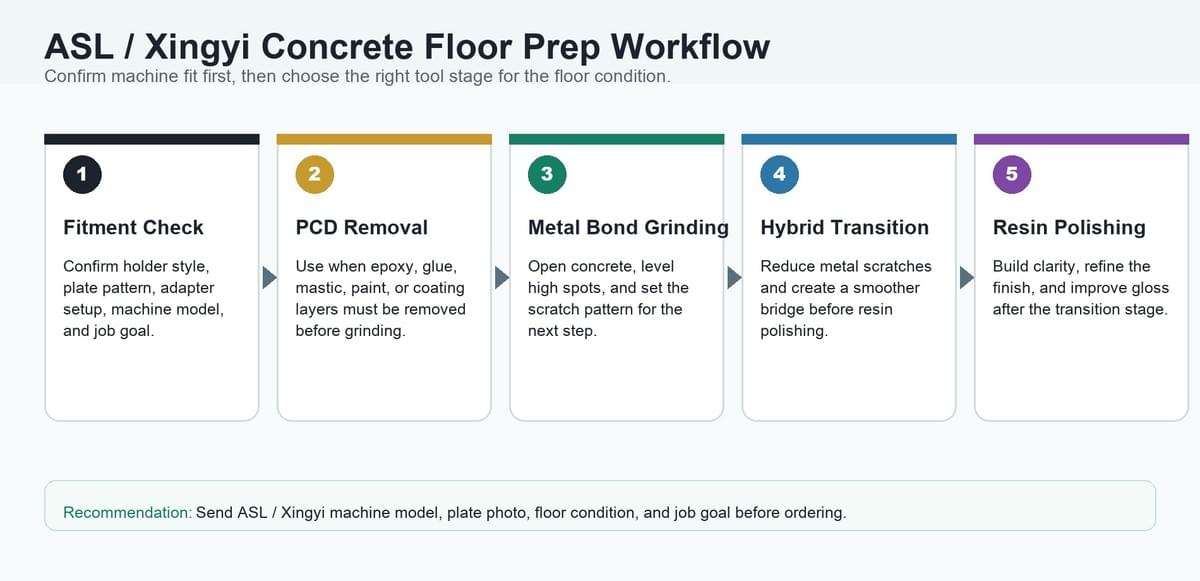
Not all hybrid pads do the same job, even if they are used in the same stage of the concrete floor process. If the goal is to move from metal grinding into a cleaner and more controlled surface, the choice between copper bond, iron bond, and ceramic hybrid pads matters. The right answer depends less on the pad name and more on the actual floor condition and polishing goal.
Why hybrid pad type matters
Many buyers focus only on grit number, such as 50# or 100#, but grit alone does not explain how a hybrid pad behaves. Two pads can both be called 50# and still work very differently if one uses copper bond, one uses iron bond, and one uses ceramic structure.
That is because the hybrid stage is not just about making the floor finer. It is about how the pad handles the handoff after metal bond grinding tools, how it deals with the remaining scratch pattern, and how easily it helps the workflow move toward resin polishing pads.
So the correct question is not only “Which grit should I use?” The better question is “What is my real goal after the metal stage?”
What copper bond hybrid pads are best for
Copper bond hybrid pads are usually the most practical choice when the goal is to bridge after metal grinding without making the process too aggressive again. This is why they are often the default recommendation when a contractor wants to move from medium-bond metal tools into resin more smoothly.
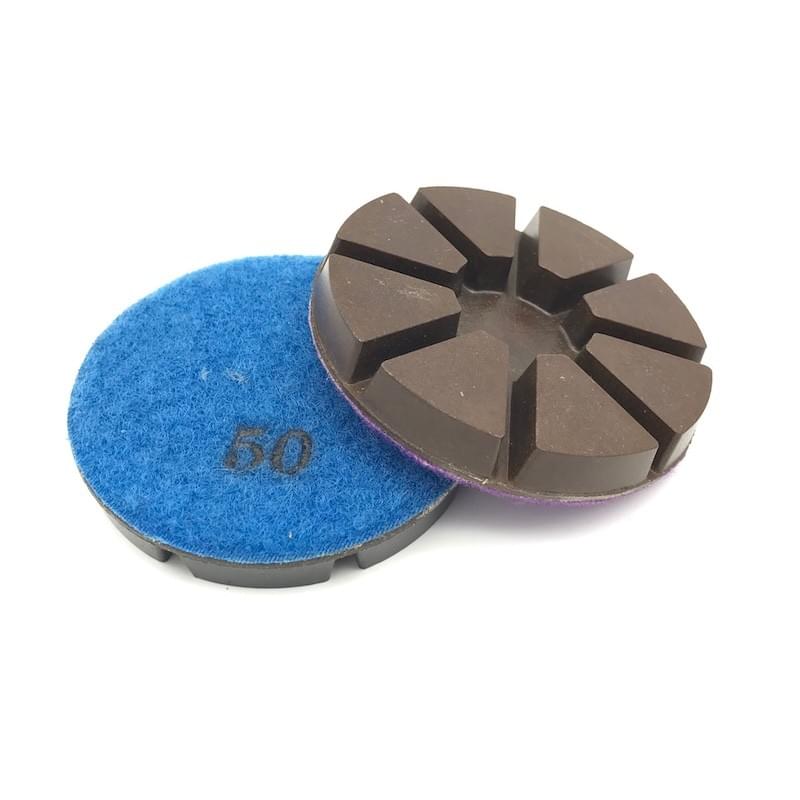
A copper bond hybrid pad usually gives a good balance between cutting ability and transition control. It still has enough bite to deal with the heavier scratch pattern left by 30#, 60#, or 100# metal tools, but it does not pull the workflow back into a full metal-style grinding behavior.
That is why copper bond is often the best answer when the contractor’s target is:
- scratch removal after metal
- smoother transition into resin
- a repeatable and easy-to-restock workflow
- a simpler bridge step between opening and refinement
In many real jobs, a 50# copper bond hybrid pad is the most useful first transition choice because it handles the metal scratches more directly than a ceramic option, while staying easier to control than an iron-bond style step.
What iron bond hybrid pads are best for
Iron bond, or metal-style hybrid pads, are more aggressive. In practical terms, they sit closer to the metal stage than the resin stage. That means they are often better when the floor is still difficult, the scratch pattern is heavy, or the contractor needs stronger correction before moving forward.
- harder to cut
- rougher after the metal stage
- carrying heavier scratches than normal
- still needing more stock removal or stronger bite
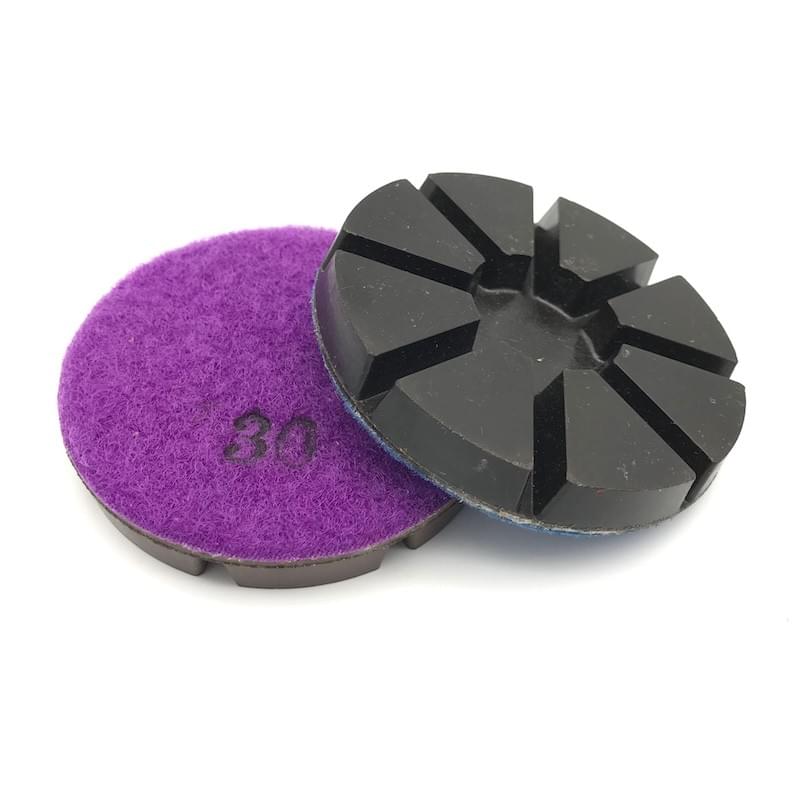
But that same strength is also the reason iron bond is not always the best default choice. In many jobs, especially when the contractor wants a clear transition step, iron bond can feel too heavy and too close to metal grinding. Instead of simplifying the process, it can make the workflow feel more aggressive again.
So iron bond hybrid pads are not wrong. They are just more specialized. They make the most sense when the job still needs more cutting power after metal, not when the customer mainly wants a smooth bridge into resin.
What ceramic hybrid pads are best for
Ceramic hybrid pads are usually more refinement-focused. Compared with copper bond, they often feel smoother and less aggressive. That makes them more suitable when the floor is already under better control and the contractor wants a cleaner, lighter transition before moving deeper into resin stages.
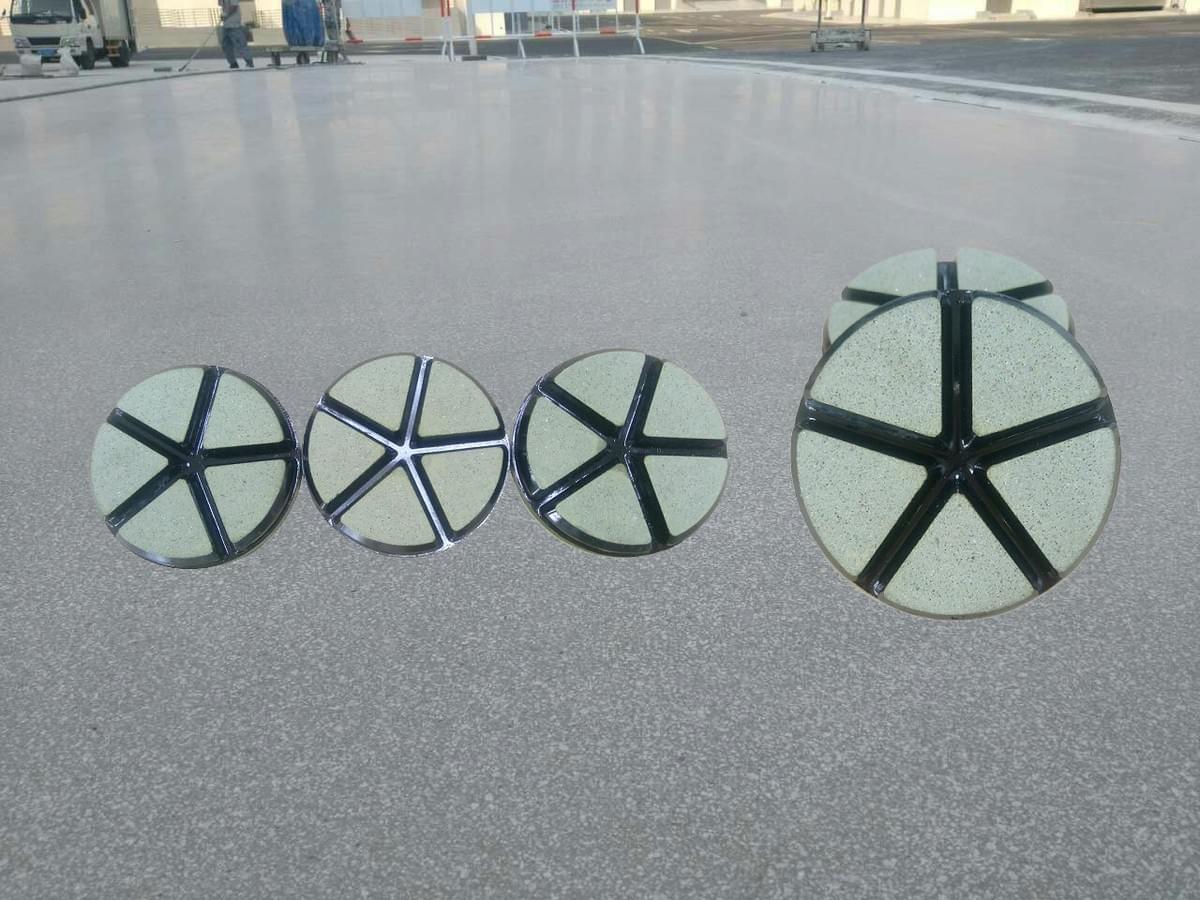
Ceramic hybrid pads often make sense when:
- the metal scratch pattern is not especially heavy
- the contractor already likes ceramic-style transition
- the floor does not need as much cutting force after metal
- the goal is a calmer refinement step rather than stronger correction
This is why ceramic hybrid pads can work well in later transition stages, or on jobs where the floor is already behaving well after the metal steps. But if the real problem is still visible metal scratches, ceramic is not always the strongest first recommendation.
Which one is best for different construction goals?
The easiest way to choose is to start from the actual job target.
If the goal is scratch removal after metal grinding, copper bond is usually the best starting point. It gives a stronger bridge effect without making the workflow too heavy.
If the goal is more aggressive correction after metal, iron bond may be better. This is the direction to consider when the slab still feels rough, hard, or difficult even after the main metal sequence.
If the goal is lighter refinement and smoother transition, ceramic is often the better fit. It is more suitable when the floor has already moved past the rougher transition stage and the operator wants more control than bite.
In simple terms:
- Copper bond = best general bridge after metal
- Iron bond = more aggressive, closer to metal behavior
- Ceramic = more refinement-focused, closer to smoother transition
Why copper bond is often the easiest recommendation
For many contractors, the most common need is not extreme aggression and not late-stage refinement. The most common need is simply this: “How do I carry the floor from metal into resin without wasting time and without leaving too many scratches behind?”
That is why copper bond is often the easiest and most practical recommendation. It fits the most common transition problem. It helps the customer understand the system more clearly. It is also easier to explain in a repeatable workflow:
A simple workflow is:
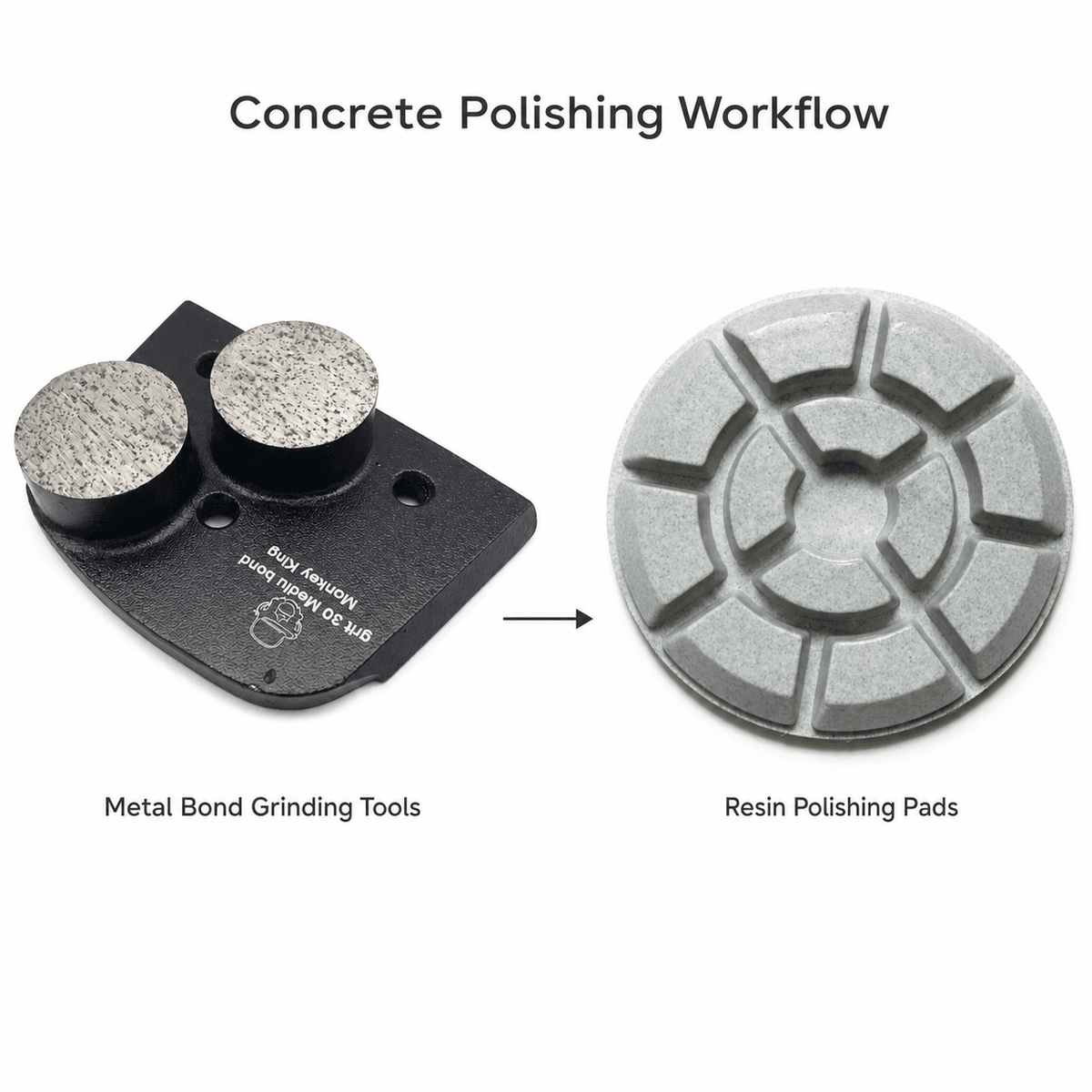
1. metal bond grinding tools
2. copper bond hybrid pad
3. resin polishing pads
That sequence makes sense to contractors, distributors, and even first-time buyers who are trying to build a complete floor process instead of buying isolated tools.
Why pad shape also matters
Bond type is important, but pad shape also affects performance. For a more aggressive 50# transition role, a more open segmented design is often better because it gives:
- clearer cutting action
- better debris removal
- lower heat build-up
- stronger engagement with the remaining metal scratch pattern
A denser or more continuous design often makes more sense in finer hybrid positions, such as a later 100# hybrid step, where the goal shifts toward smoother refinement rather than direct bridging after metal.
So the right hybrid pad is not only about copper, iron, or ceramic. It is also about whether the pad structure matches the actual point in the process.
A practical workflow example
A contractor using 30# / 60# / 100# medium bond metal tools and then moving into hybrid before 200# / 400# / 800# resin usually needs the hybrid stage to do one main job: carry the floor out of the metal scratch zone and make the resin stages easier.
In that case, a 50# copper bond hybrid pad is often the most practical main recommendation. It bridges better than ceramic for that setup, and it is easier to explain and control than jumping into a more aggressive iron-bond transition unless the slab clearly still needs more bite.
That is also why many real jobsite workflows do not start by asking “Which hybrid bond is best in theory?” They start by asking “What problem is still left after metal?”
How to Choose on Site
Choose copper bond hybrid pads when you need a practical bridge after metal grinding. They are usually a good first choice for removing metal scratches while keeping the floor under control.
If the scratch pattern is still visible after the first transition step, do not move too quickly into resin pads. Adjust the hybrid pad type or grit first, then continue the polishing sequence.
Choose iron bond hybrid pads when the floor still needs stronger cutting after metal. Choose ceramic hybrid pads when the floor is already controlled and the goal is smoother refinement before resin.
The right question is not “Which hybrid pad is best?” The better question is: what problem is left after metal grinding?
Need help matching hybrid pads to your grinder and polishing sequence?
Send us your grinder model, previous metal grit, concrete hardness, and target finish. Monkey King Diamond Tools can suggest copper bond, metal hybrid, ceramic hybrid, resin, or metal bond tooling options for your job.
Related pages