

A recent 250mm single-phase grinder inquiry started as a normal diamond grinding disc question. Once the material was confirmed as bitumen, the recommendation changed.
Bitumen is not the same as ordinary concrete grinding.
It is sticky. It can soften with heat. It can clog ordinary diamond segments. If the tool only grinds instead of scraping, the disc may skate over the surface, smear the material, or load up quickly.
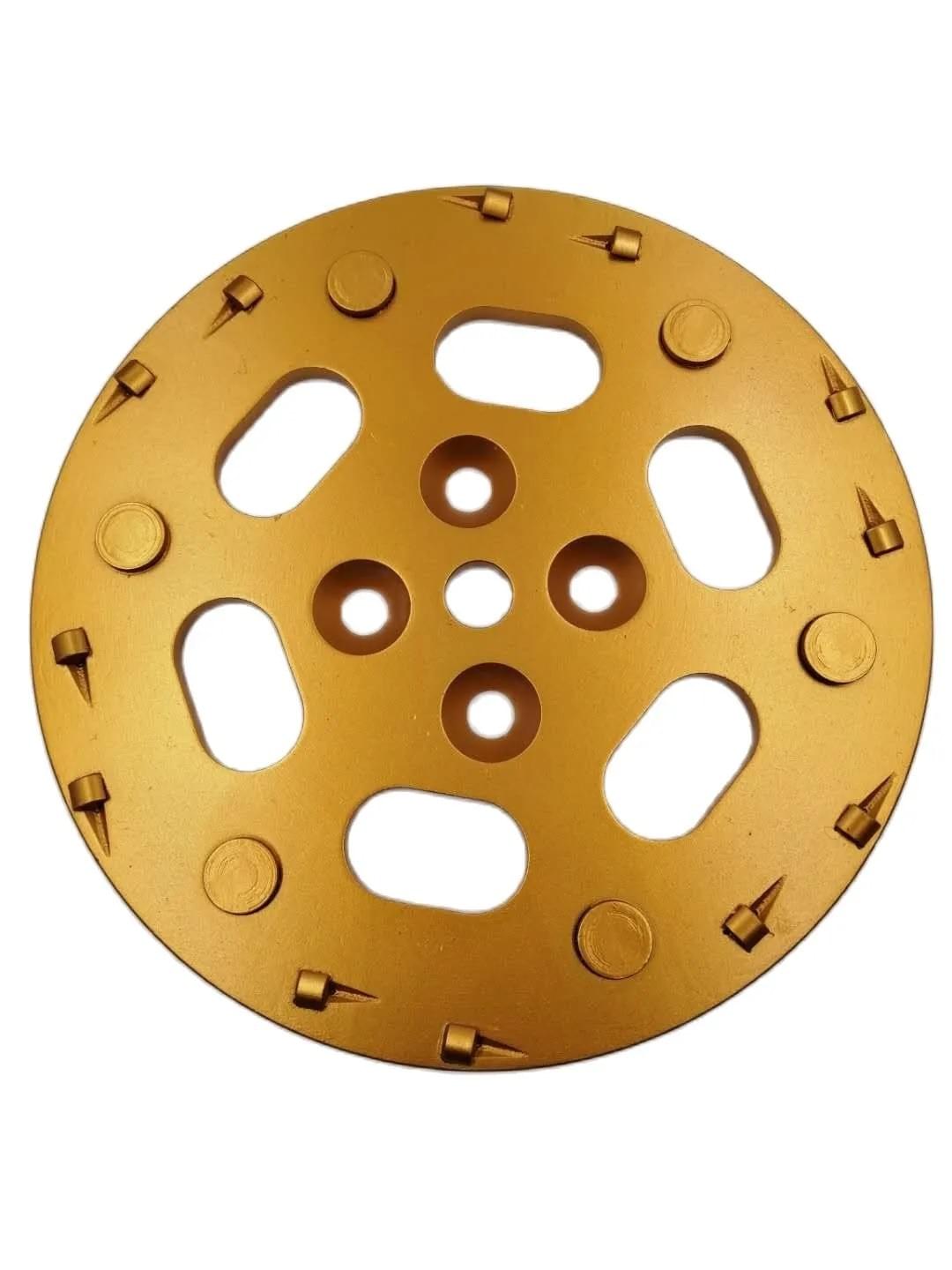
That is why choosing a 250mm PCD disc is not just about asking, “How many PCD pieces are on the disc?” A better question is:
What material are you trying to remove, how thick is it, and how much damage can the concrete surface accept before the next grinding step?
For product selection, start with PCD coating removal tools when the material is bitumen, black mastic, epoxy, glue, paint, or thick coating. After removal, use metal bond grinding tools to clean the scratch pattern and prepare the concrete for the next step. If the machine fit, hole pattern, or plate setup is unclear, check shop by machine or send the plate photo through contact us.
For thick epoxy, heavy coating, glue, black mastic, or bitumen, PCD tooling is usually chosen because it cuts by scraping and shearing the coating away from the slab. Safety note: If the material is old black mastic, cutback adhesive, or an unknown bitumen layer, test for asbestos and confirm dust-control requirements before mechanical removal. Concrete grinding can create respirable crystalline silica dust, and old floor mastics may require regulated removal methods. Tool selection should come after the contractor confirms the material and jobsite safety requirements. A normal metal bond diamond disc is designed more for grinding concrete. It can work after the coating is removed, but it is usually not the first choice for sticky coating removal.
One common misunderstanding is that more PCD pieces automatically means better removal for thicker coating.
Not exactly.
When a disc has fewer PCD pieces, each PCD receives more cutting pressure. That makes the tool more aggressive. It can bite into thick epoxy or heavy coating more strongly, especially when the machine has enough weight and the coating needs to be opened fast.
When a disc has more PCD pieces, the contact points are spread out. The tool often runs smoother and feels less aggressive. This can be useful for thinner coating, glue residue, or jobs where the contractor wants to reduce deep scratches in the concrete. But on thick sticky material, too many contact points may reduce the bite.
So for heavy coating, the answer is not always “more PCD.” Sometimes the answer is fewer PCDs, a sharper scraping angle, or a more open design that keeps the material from loading up.
For bitumen, the decision becomes even more specific.
Bitumen and black mastic are often softer and stickier than epoxy. If the disc generates too much heat, the material can smear. In this case, a scraper-style PCD disc or a tungsten scraper may be a better starting point than a standard grinding disc.
A 250mm PCD disc with runner bars can also be a practical choice. The runner bars help control the depth of cut. They reduce the chance of the PCD digging too deeply into the concrete, especially on softer slabs. This type is often useful when the contractor wants to remove the coating but still keep the floor under control for the next grinding step.
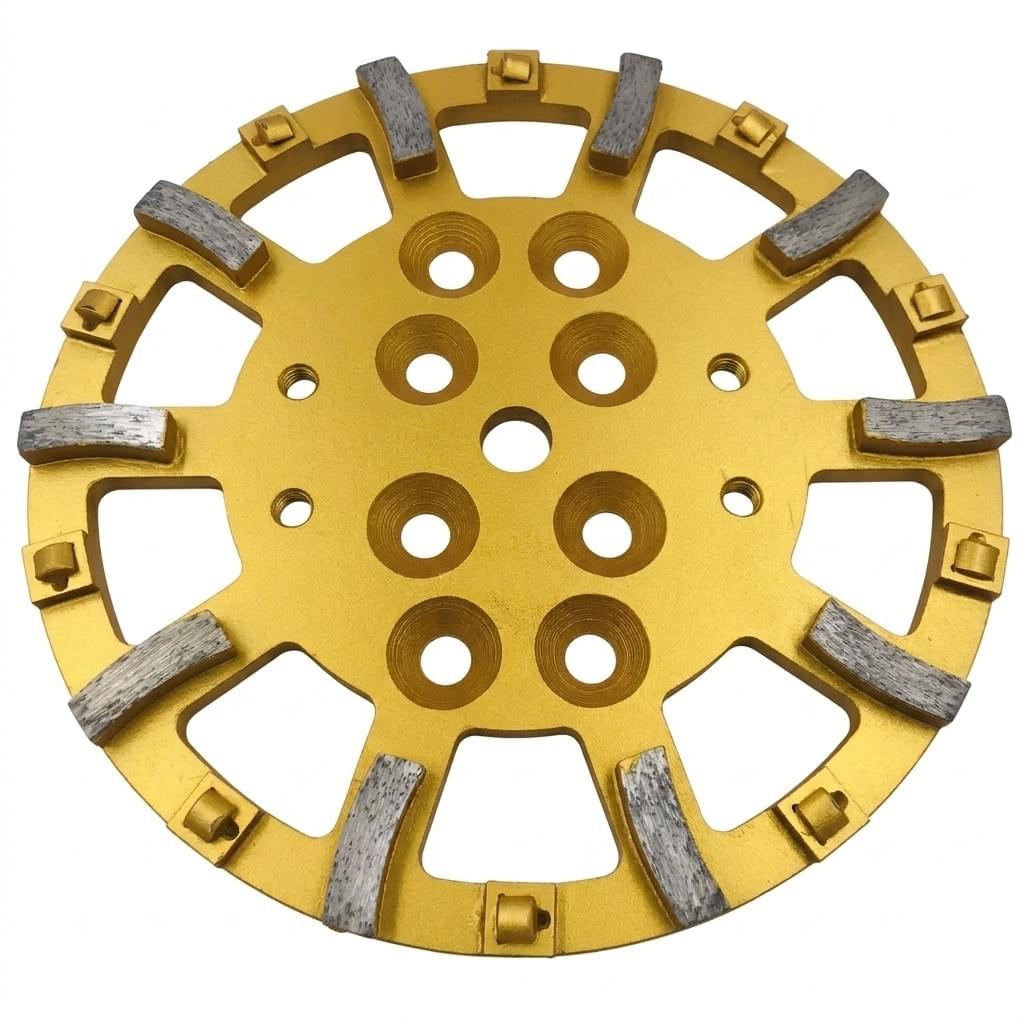
A full aggressive PCD disc without runner bars can remove fast, but it may leave a rougher surface. That is acceptable when the next step will be heavy grinding, leveling, or surface preparation for a new coating. But if the floor needs a cleaner transition after removal, a controlled PCD with runner bars may be safer.
For a 250mm single phase grinder, machine power and weight also matter. Smaller single-disc machines do not always have the same downward pressure as larger planetary grinders. If the PCD disc is too aggressive, the machine may jump, grab, or become hard to control. If the disc is too smooth, it may not remove the coating efficiently.
That is why the floor photo and bottom plate photo are important before choosing the tool.
For a 250mm grinder, we normally check four things before recommending a PCD disc:
First, the material to remove. Epoxy, glue, black mastic, paint, waterproofing, and bitumen do not behave the same.
Second, the coating thickness. A thin residue layer does not need the same tool as a heavy coating build-up.
Third, the machine connection. A 250mm disc can have different hole patterns, center holes, bolt spacing, and mounting systems.
Fourth, the required surface after removal. If the contractor only needs to strip the coating before rough grinding, a more aggressive tool can be used. If the floor must stay flatter and cleaner, a controlled scraper design is better.
For a bitumen removal job, the key detail is the material itself. The tool needs to skim or scrape the bitumen, not just grind the concrete. That means a normal diamond grinding disc is usually not the best first recommendation. The better direction is a scraper-type PCD disc, PCD with runner bars, or tungsten scraper tooling, depending on the bitumen thickness and the machine plate.
After the PCD or scraper step, the floor usually still needs follow-up grinding. Many contractors use a coarse metal bond diamond tool after coating removal to clean the remaining surface, remove scratches, and prepare the slab for the next stage.
The practical rule is simple:
For thick epoxy or heavy coating, choose a more aggressive PCD structure.
For thin coating or residue, choose a smoother and more controlled PCD structure.
For bitumen or black mastic, think scraper first, not ordinary grinding disc.
For softer concrete, use more control to avoid deep gouging.
For a 250mm single phase grinder, always confirm the bottom plate before producing the disc.
A good 250mm PCD disc is not selected by PCD count alone. It is selected by jobsite material, machine size, coating thickness, and the next step in the floor process.
For tool selection, the best first step is to send a clear floor photo and a photo of the grinder bottom plate. With those two photos, the correct PCD disc design can be matched more accurately.
Related Pages